
Kitchen Cabinet Quotes in Bethesda, MD
Prepare a cabinet list and compare what each kitchen quote includes.
Send my cabinet inquiry
Or call (562) 203-3232. Calls only, we do not receive text messages.
Kitchen cabinet quotes in Bethesda are most useful when you can identify what changed between them. Bethesda Cabinet Atelier’s comparison guide begins with a named product schedule and treats every alternative as an answer to that schedule. An attractive rendering or a low total is only a starting point for understanding the offered goods.
- Independent buying guidance
- Product inquiries
- Seller availability confirmed separately
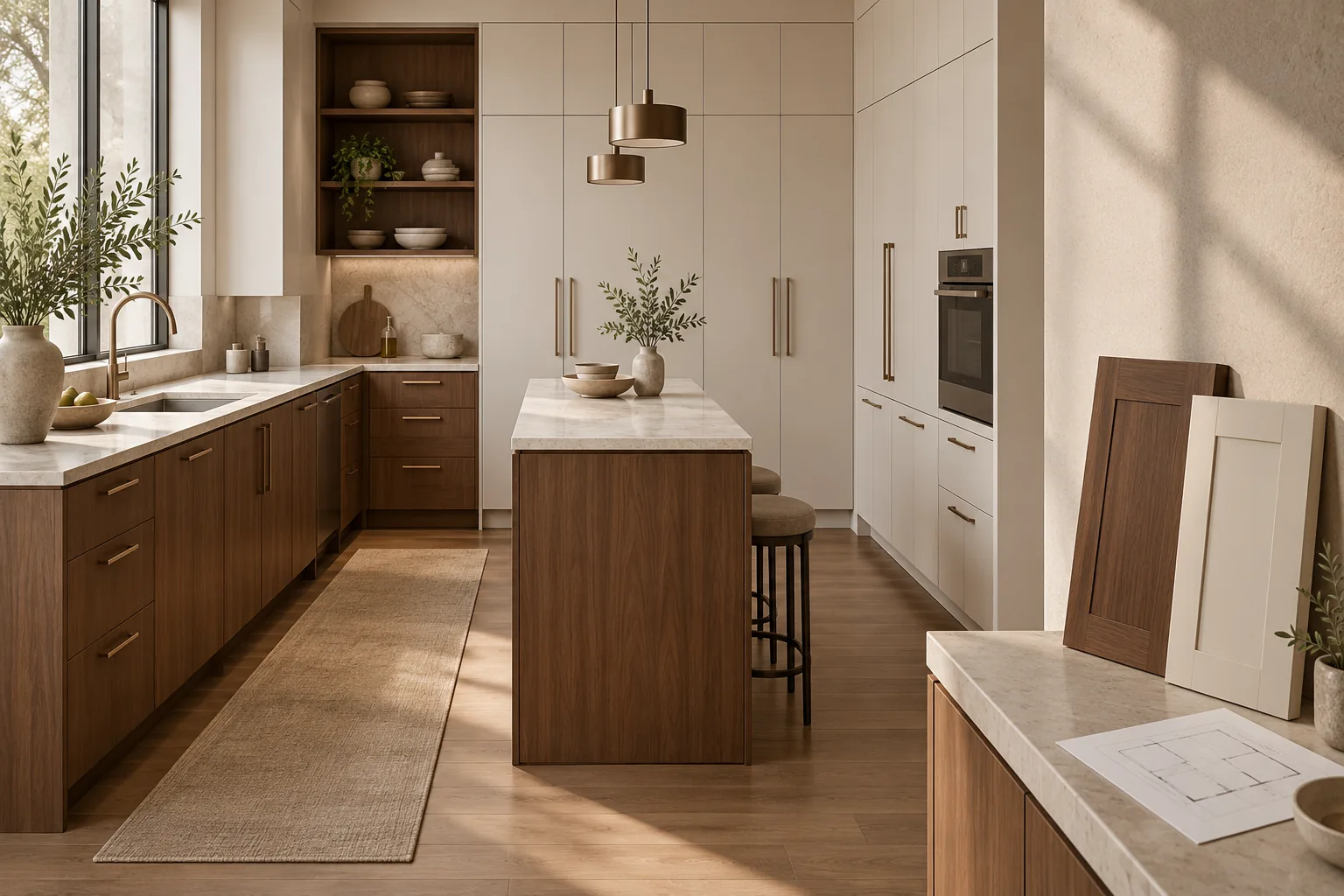
Buying questions: kitchen cabinet quote comparison
The guide provides independent buying information, and form submissions become records for owner review rather than automatic seller requests. No reply or accepted purchase is guaranteed. Use the comparison below to decide which product differences deserve investigation before you approve a final version.
About Bethesda Cabinet Atelier
Know who handles each part
Independent cabinet buying information and quote-request service. We do not manufacture, stock or install cabinets. A referral, supplier response, appointment or purchase is not guaranteed. Product availability, delivery and installation must be confirmed directly with the seller or separately engaged contractor.
Create the reference schedule before inviting alternatives
Give each proposed cabinet a position identifier that stays recognizable as the comparison develops. Use wall labels and a drawing reference, then describe the configuration and quantity intended at each position. The list should distinguish base, wall and tall units without assuming every seller uses the same item codes or naming conventions.
Include the accompanying pieces that can disappear in a summary: finished ends, fillers, panels, trim and selected accessories. Mark a piece as requested, uncertain or excluded. A complete-looking image cannot tell you whether every item shown is included in the actual offered price. Ask the seller to relate its item list to your positions.
For a hypothetical kitchen, call the sink-wall schedule version A and identify the retained appliances separately. If an appliance remains, its actual dimensional information belongs with the room record. The supplied IKEA US planning guide supports that preparation. It does not verify your measurements; the party responsible for the final layout must identify which inputs it will rely on.
Distinguish a product substitution from a changed kitchen
An alternative can replace one product while leaving the arrangement intact, or it can change the arrangement itself. Record which kind it is. A different drawer configuration at the same position is easier to compare directly than a proposal that moves an appliance and changes the surrounding cabinet list.
Imagine a hypothetical seller offering a different pantry configuration from the one in version A. Ask it to name the difference, explain the proposed storage function and identify any accompanying panels or accessories that change. Then compare the alternative with your priorities. Do not decide that two configurations are equivalent because their exterior doors look similar.
If the alternative moves a cabinet run, give it a new drawing and schedule version. Keep version A available so you can see what the broader change accomplishes. An unexplained combination of items from both versions should not become the order. The comparison is useful only while each total can be connected to one identifiable arrangement.
Ask for evidence that belongs to the offered line
Name the proposed product line, door style and finish in the comparison. Ask for written box and drawer construction information, the hardware offered and the relevant accessory descriptions. General labels such as premium or durable do not identify which features you would actually receive.
KCMA’s supplied source identifies ANSI/KCMA A161.1 as a kitchen and vanity performance and construction standard. If certification is important to your choice, request evidence for the exact line being offered. Do not treat the existence of the standard as proof that an unnamed product is certified, or infer that every finish in a brand has identical documentation.
Use finish evidence carefully as well. A sample can help you evaluate appearance, but you should know which named finish it represents and how the seller describes the ordered goods. Record your selection with the version of the quote. If a retained cabinet must be matched, keep that as a specific unresolved question instead of treating a screen image as confirmation.
Compare quantities and inclusions before the cost total
Arrange each quote beside the same reference rows. Look for differences in box quantities and configurations first, then in finish, accessories and accompanying pieces. A blank row should prompt a question about exclusion or omission. It should not silently become an item supplied by another party.
Separate freight or pickup from carrying, assembly and external installation labor. Ask where the seller’s responsibility ends and who prices any task beyond that point. The FTC’s guidance about written home improvement estimates supports reviewing the scope of separately engaged work, but it does not turn a cabinet proposal into a complete renovation agreement.
Preliminary estimates may change when dimensions, products or handling arrangements change. The final written quote should state the offered price for the accepted schedule and its inclusions. In the pantry example, compare the alternative’s actual goods and tasks rather than assuming that a lower figure describes the same purchase. Write the cause of a difference beside the totals so you can revisit the decision later.
Resolve the questions that can change an order
Make an open-items list after reading the proposals. Identify missing product details, provisional room measurements and any delivery or receiving assumption. Assign each question to the party who can answer it. A seller can describe its goods and terms, while the person responsible for a drawing can explain how fit will be verified.
For retained appliances, make sure the proposed layout uses the current model information. Check that the reviewer has considered the operation of doors and drawers as well as the space occupied by a closed cabinet. You are gathering evidence for a decision, not asking this guide to approve a design or invent a universal clearance.
If an answer changes the schedule, request a revised proposal that identifies the affected version. Avoid relying on an isolated message about one item while the main quote still lists the earlier one. A clear revision should let the purchaser understand which goods, finish and quantities now form the offer without reconstructing the conversation from memory.

Keep the accepted version readable at receipt
Before approving the purchase, bring the chosen drawing, schedule and written quote into agreement. Identify the purchaser and the person who will check the delivery. They should be able to connect a package or item reference to the accepted list, even if they did not participate in every product discussion.
Ask the actual seller for receiving and discrepancy instructions. Record the intended package or unit counts and how accompanying pieces will be identified. If the seller uses separate packages for fronts or accessories, that matters to the completeness check. Do not invent a reporting deadline or assume that a single delivery label represents every component.
Keep the accepted version alongside any later permitted change. A revised finish or substitution should have a recorded approval and an updated item description. For the hypothetical kitchen, this prevents a pantry alternative from being accepted informally while the rest of the room still refers to an incompatible earlier schedule. Good quote comparison ends with a traceable purchase, not merely a favored total.
Inquiry process
From buying questions to a possible supplier quote
Sending an inquiry does not reserve products or book work.
Describe the purchase
Include project ZIP, room, approximate cabinet list and preferred timing.
Clarify requirements
Identify assembly, access, measurements and any separately arranged labor.
Confirm referral availability
An inquiry can be referred only if a suitable seller accepts the location and product request.
Review seller terms
Confirm the final drawing, itemized price, payment, delivery and return terms directly before ordering.
Illustrative product choices
Illustrative product visualizations, not completed work, local properties or supplier facilities.
Local buying information
Local inquiry guides
Questions
Kitchen Cabinet Quote Comparison: Common Questions
What should stay constant while I compare kitchen proposals?
Use one identifiable room arrangement and requested item schedule, including quantities, accompanying pieces and finish selections. Ask each seller to identify departures from it. A proposal using a different arrangement should be treated as a separate version rather than folded into the original comparison.
How do I evaluate a substituted pantry configuration?
Ask for the exact offered configuration, usable storage information and accompanying components. Compare its function with the priority that led you to request the pantry. Record which schedule rows change so its price and benefits can be assessed against a clear reference.
Does a standard mentioned in a brochure prove my cabinets are certified?
Request documentation for the specific offered line and the claim the seller is making. A recognized standard provides a useful question, but its existence cannot certify an unidentified product. Keep the evidence attached to that option in your comparison.
What if the seller answers a question without revising the quote?
Check whether the answer changes goods, quantities, finish or receiving terms. If it does, request an identifiable updated offer before approving the purchase. A separate message should not leave the accepted schedule ambiguous for the purchaser or receiver.
Talk to us about kitchen cabinet quote comparison
Describe the purchase and project ZIP in Bethesda. Supplier acceptance and any referral are confirmed separately; no visit or quote is booked by this form.
Calls only, we do not receive text messages.